A customer may ignore an email, skip a social post, or miss a call—but a well-written SMS still gets noticed almost instantly.
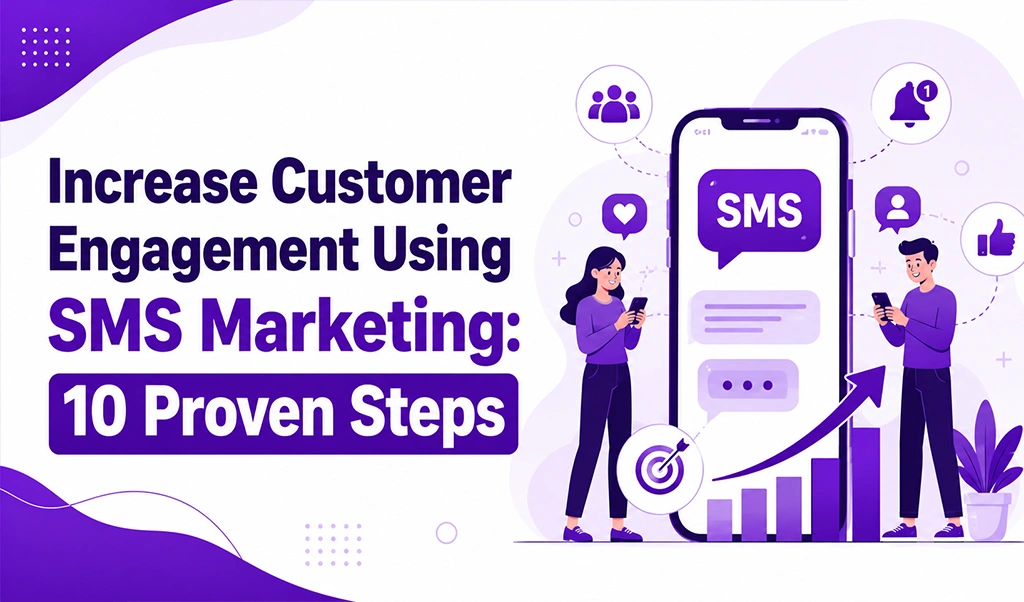
That is exactly why SMS continues to be one of the most practical communication tools for brands that want faster attention and better response. If your goal is to Increase Customer Engagement Using SMS Marketing, the real opportunity is not just sending more messages. It is about sending the right message to the right person at the right time.
So if you are wondering how to use SMS in a way that feels helpful instead of intrusive, this guide will break it down in a reader-friendly way.
What Is SMS Marketing?
SMS Marketing is a digital marketing strategy where businesses send promotional or transactional messages directly to customers via text messages (SMS) on their mobile phones. It is widely used for offers, updates, reminders, and alerts because of its high open rates and instant delivery. Businesses typically require customer consent before sending such messages.
Example: A clothing brand sends an SMS saying, “Flat 30% OFF on all summer collections! Visit our store or shop online today. Offer valid till midnight.”
Why SMS Still Matters For Customer Engagement
In a world full of apps, ads, and endless notifications, SMS remains powerful because it is simple and direct. It reaches people on a device they always carry, and it does not require them to download anything or open a special platform.
For businesses, this matters because engagement often starts with visibility. If your message is not seen, it cannot drive any action. SMS gives brands a faster way to:
- Share Offers
- Send Reminders
- Confirm Orders
- Request Responses
- Recover Inactive Customers
- Build Regular Communication Habits
ValueOne, a bulk sms company in delhi, emphasizes Bulk SMS for alerts, offers, updates, and promotions, and also highlights long-code and messaging tools for two-way customer interaction.
That makes SMS one of the most practical channels for brands that want a stronger customer connection without overcomplicating communication.
10 Effective Steps For Increasing Customer Engagement Using SMS Marketing
Creating an SMS marketing strategy is easy. Making it work for real customer engagement takes a smarter approach. These 10 practical steps can help businesses use SMS more effectively.
1. Start With Permission-Based Communication
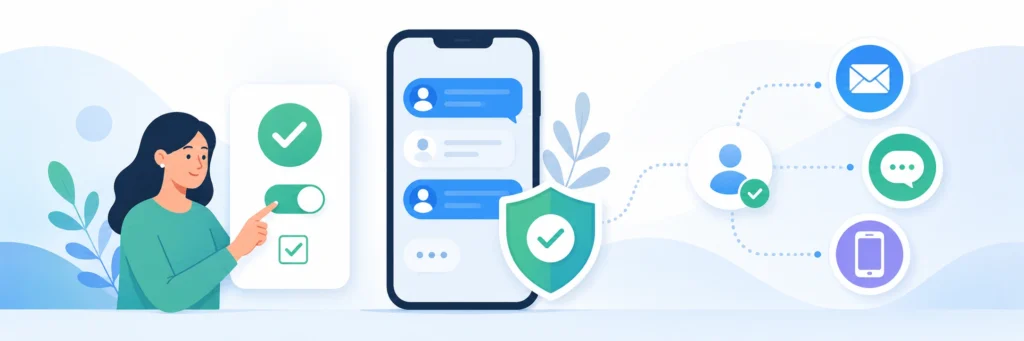
The first rule of strong SMS engagement is simple: message people who have agreed to hear from you.
Permission-based messaging matters because it improves trust and reduces the chance of customers feeling irritated. It also makes your list more valuable, because people who have opted in are more likely to respond.
Good ways to collect SMS opt-ins
- website forms
- checkout boxes
- lead forms
- in-store signups
- WhatsApp or social campaign follow-ups
- existing customer onboarding flows
2. Segment Your Audience Before Sending Anything
One of the biggest SMS marketing mistakes is sending the same text to everyone. A new lead, a repeat customer, and an inactive buyer should not all receive the same message. Better engagement usually comes from segmentation.
You can segment your SMS audience by:
- new vs existing customers
- recent buyers
- inactive users
- city or region
- product interest
- festival shoppers
- appointment-based customers
- service renewal customers
This is where SMS marketing strategies become smarter. Instead of using SMS as a broadcast-only channel, use it as a personalized communication channel. For example:
- New leads can get welcome offers.
- Repeat buyers can get loyalty rewards.
- Inactive users can get reactivation messages.
- Existing customers can get service reminders or updates.
That one change alone can improve customer engagement SMS performance significantly.
3. Keep Your Messages Short, Clear, And Action-Focused
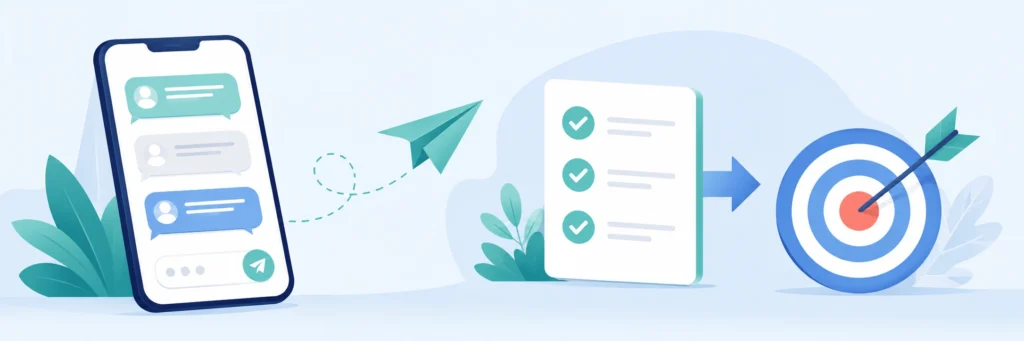
SMS has very little room for confusion. If the message is too long, too vague, or too sales-heavy, people will ignore it. A strong SMS usually has three parts:
- a clear purpose
- a simple value point
- one action to take
Example structure:
- Greeting or brand mention
- Offer, reminder, or update
- CTA like “Shop now,” “Reply YES,” or “Book today.”
Good SMS example: Hi Priya, your skincare refill is due. Reorder today and get 10% off. Tap here: [link]
This kind of message is short, relevant, and easy to act on. That is how SMS marketing for business becomes useful instead of noisy.
4. Use SMS For More Than Promotions
Many brands only use SMS for discounts. That is a missed opportunity. If you want to Increase Customer Engagement Using SMS Marketing, think beyond offers. Customers engage more when your messages are timely and useful. SMS can be used for:
- order confirmations
- shipping updates
- appointment reminders
- payment alerts
- abandoned cart nudges
- feedback requests
- loyalty point updates
- event reminders
- festive greetings
- service renewals
Businesses should specifically promote SMS for alerts, updates, notifications, promotions, and high-priority communication, thereby supporting its use across different parts of the customer journey.
This is where good SMS marketing strategies stand out. They do not rely only on discounting. They build an ongoing relationship.
5. Personalization Improves Response
People pay more attention when a message feels relevant to them. Personalization in SMS does not always mean deep automation. Even small touches can improve performance, such as:
- using the customer’s name
- referring to a recent order
- mentioning a renewal date
- sending city-specific offers
- tailoring messages by interest category
Example: Hello Amit, your car service is due this week. Book today and get a free pickup in Gurugram.
This works better than a generic message because it feels specific and timely.
6. Timing Can Make Or Break Engagement
Even the best message can fail if it arrives at the wrong time.
A late-night marketing SMS can annoy customers. A work-hour reminder for a lunch offer may come too early or too late. Timing should match customer behavior. General timing tips:
- Send offers when purchase intent is likely
- Send reminders before deadlines, not after
- avoid sending too often
- test weekdays vs weekends
- Align festive campaigns with shopping periods
If your audience is in India, timing is especially important during festivals, sales periods, and region-specific shopping windows. Good SMS marketing strategies for small businesses often come from observing customer habits, not just sending messages on a fixed schedule.
7. Make Your Cta Obvious
Every SMS should answer one question clearly: what should the customer do next? If the action is unclear, engagement drops. Strong CTA examples:
- Shop now
- Book today
- Reply YES
- Claim offer
- Confirm slot
- Pay now
- View details
Weak CTAs usually sound vague or passive. A strong CTA gives the customer one easy next step. This is especially important in customer engagement SMS campaigns, where you want fast action.
8. Use Two-Way SMS Where Possible
Engagement becomes stronger when customers can respond, not just receive. That is why two-way messaging matters. Instead of only sending a one-directional message, allow customers to reply or interact when appropriate. Good use cases for two-way SMS:
- appointment confirmation
- lead qualification
- event attendance
- quick surveys
- customer support routing
- interest-based responses
This can improve response rates because it turns messaging into a conversation rather than a one-sided announcement.
9. Combine SMS With Other Channels
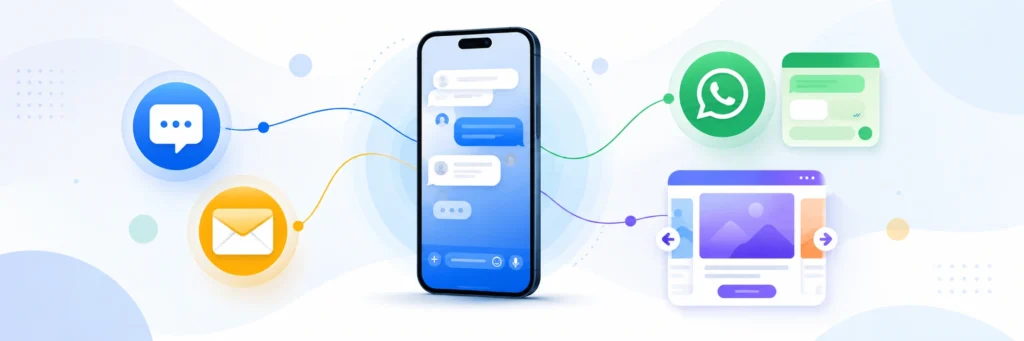
SMS works even better when it supports a larger engagement system. For example:
- Use email for detailed information
- Use SMS for reminders and urgent nudges
- Use WhatsApp for richer conversations
- Use RCS for interactive branded messaging
Businesses position their business around Bulk SMS, WhatsApp Business API, and RCS Messaging, and say these tools help businesses move from plain text to richer, more interactive conversations with images, buttons, branding, and automated responses.
That matters because SMS marketing for business should not always work alone. It often performs better as part of a connected communication strategy.
10. Track What Actually Drives Engagement
If you want better results, measure what works. Do not rely only on the fact that the SMS was delivered. Track what happened after delivery. Useful SMS engagement metrics:
- click-through rate
- reply rate
- redemption rate
- conversion rate
- unsubscribe rate
- repeat engagement rate
These numbers help you refine your SMS marketing strategies over time. For example:
- If click-through is low, your CTA may be weak.
- If unsubscribe is high, your targeting may be poor.
- If replies are low, your offer may not feel relevant.
Engagement improves when you keep learning from campaign performance.
Best SMS Marketing Strategies For Small Businesses
Small businesses often think SMS is only for large brands. That is not true.
In fact, SMS can be especially useful for local businesses, service providers, clinics, salons, retailers, coaching centers, and growing online stores. The best SMS marketing strategies for small businesses include:
- sending reminders and follow-ups
- promoting limited-time local offers
- using name-based personalization
- reactivating old customers
- asking for quick reviews
- sending festival and occasion-based campaigns
- running simple loyalty or repeat-purchase nudges
ValueOne’s site says its services are built for startups, SMEs, and enterprise needs, which makes SMS a relevant option for both small and larger businesses.
For smaller brands, the biggest advantage of SMS is usually speed and simplicity.
Common SMS Marketing Mistakes To Avoid
If you want to truly Increase Customer Engagement Using SMS Marketing, remember this: the goal is not to “push” messages. The goal is to make customers feel informed, valued, and nudged at the right time.
Even a strong tool can fail if it is used badly. Avoid these common mistakes:
- sending too many promotional messages
- ignoring segmentation
- writing unclear messages
- failing to include a CTA
- messaging without permission
- sending at poor times
- not tracking campaign results
- Treating every message like a sales blast
Why SMS Engagement Still Works In India
For Indian businesses, SMS remains especially relevant because it is direct, familiar, and accessible across device types. It does not depend on app behavior the way many other channels do. That makes it useful for industries like:
- education
- healthcare
- e-commerce
- finance
- retail
- food delivery
- real estate
- local services
Final Thoughts
If you want to Increase Customer Engagement Using SMS Marketing, the answer is not simply to send more messages. The answer is to send better messages. That means:
- message the right audience
- Keep the copy short and useful
- personalize where possible
- Choose the right timing
- include one clear action
- Use SMS for utility as well as promotion
- measure results and improve regularly
SMS still works because it is immediate, simple, and practical. When handled well, it can help businesses create stronger customer touchpoints without overwhelming the audience.
For brands exploring SMS marketing for business, especially in India, the opportunity is still strong. And with providers like ValueOne offering Bulk SMS, Promotional SMS, Transactional SMS, two-way messaging, WhatsApp Business API, and RCS Messaging, businesses have room to build a more complete engagement strategy over time.